
Table of Contents:
Operation Spiderweb was a large-scale Ukrainian Security Service (SBU) drone operation carried out on June 1, 2025, against Russian military airbases. A total of 117 FPV drones were used to target strategic aircraft, including Tu-95 and Tu-22M3 bombers.
What made Operation Spiderweb remarkable was its scale, secrecy, and unconventional execution.
Small FPV drones were transported deep inside Russia and launched close to military airbases, demonstrating how relatively inexpensive drones could threaten valuable strategic aviation far from the front line.
What Is Operation Spiderweb?
To put it simply, here’s how Operation Spiderweb worked:
Ukraine’s Security Service (SBU) secretly brought 117 FPV drones into Russia and concealed them inside specially designed wooden structures. These structures were then transported by trucks to locations near Russian military airbases.
Once in position, the roofs were opened remotely, allowing the drones to take off and fly toward Russian strategic aircraft.
The operation targeted four Russian airbases — Belaya, Dyagilevo, Olenya, and Ivanovo — including bases thousands of kilometers from Ukraine.

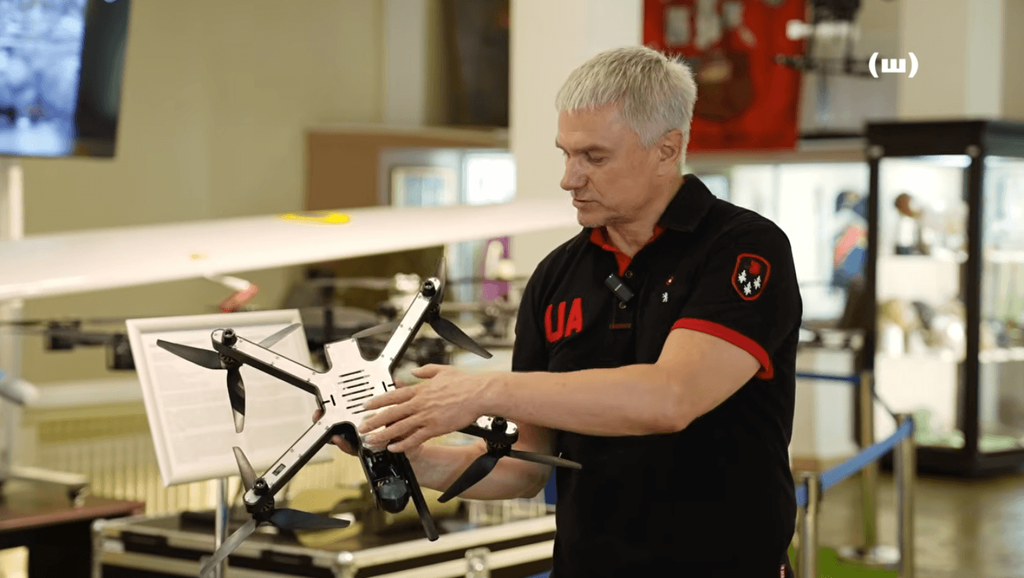
These were not ordinary low-cost FPV drones. Valeriy Borovyk, founder of First Contact, the company that developed the Osa drones used in Operation Spiderweb, said their cost at the time was approximately $2,500–3,000 per drone.
Even at that price, the cost difference was extraordinary: drones worth a few thousand dollars were used to strike strategic military aircraft worth millions.

Operation Spiderweb Targets and Damage
Which Russian Aircraft Did Operation Spiderweb Target?
Ukraine’s Security Service said Operation Spiderweb struck 41 Russian military aircraft, including Tu-95 and Tu-22M3 strategic bombers and A-50 airborne early-warning aircraft.
Independent assessments have been more conservative. Two U.S. officials told Reuters that up to 20 Russian warplanes were hit and around 10 were destroyed. Commercial satellite imagery also showed damaged and destroyed Tu-95 and Tu-22 bombers at Russian airbases.
These aircraft are particularly valuable because Tu-95 and Tu-22M bombers are no longer in production and have been extensively used by Russia to launch long-range missile attacks against Ukraine.
Belaya Airbase: Operation Spiderweb’s Strike in Siberia
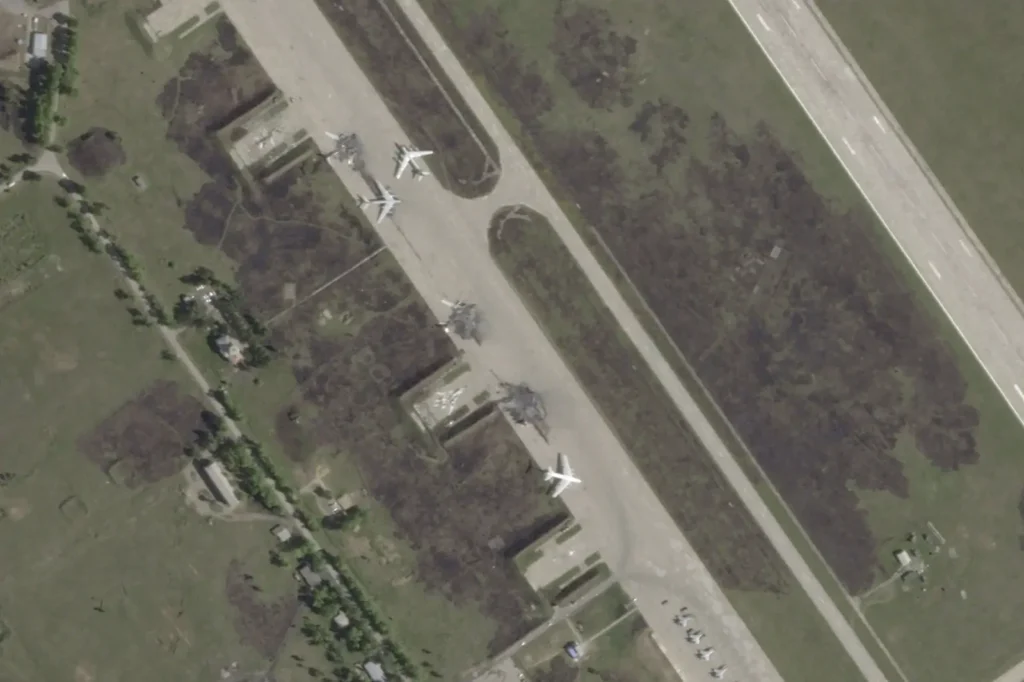
Belaya Airbase was one of the most distant targets of Operation Spiderweb. Located more than 4,300 kilometers from Ukraine in Russia’s Irkutsk region, the base hosts strategic bombers used by Russia’s long-range aviation.
But distance no longer meant safety.
Geospatial analyst Chris Biggers published satellite imagery taken by Umbra Space, revealing the aftermath of the strike on Belaya, in Russia’s Irkutsk region. The visuals confirmed serious damage:
- at least 3 Tu-95MS strategic bombers destroyed;
- at least 1 Tu-22M3 destroyed;
- at least 1 Tu-95MS damaged;
- at least 3 Tu-22M3s damaged.


📸 (Satellite imagery analysis: Chris Biggers / Umbra Space. Source: Chris Biggers on X
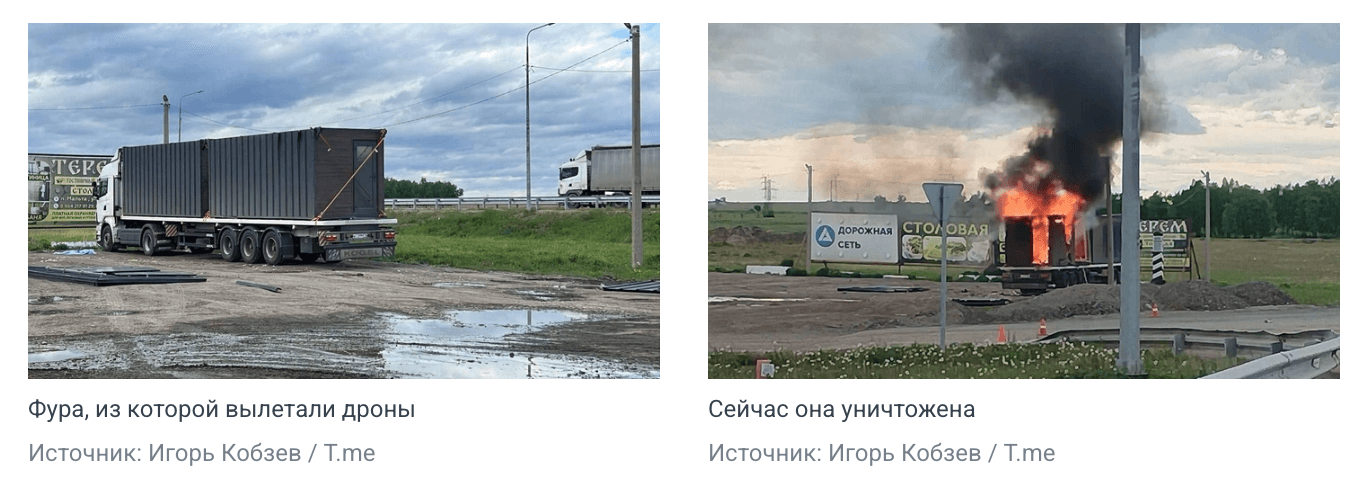
Irkutsk regional governor Igor Kobzev confirmed that drones attacked a military unit near the village of Sredny in the Usolsky District. He also said the drones had been launched from a truck in the area. Belaya Airbase is located nearby, roughly 5 kilometers from Sredny.
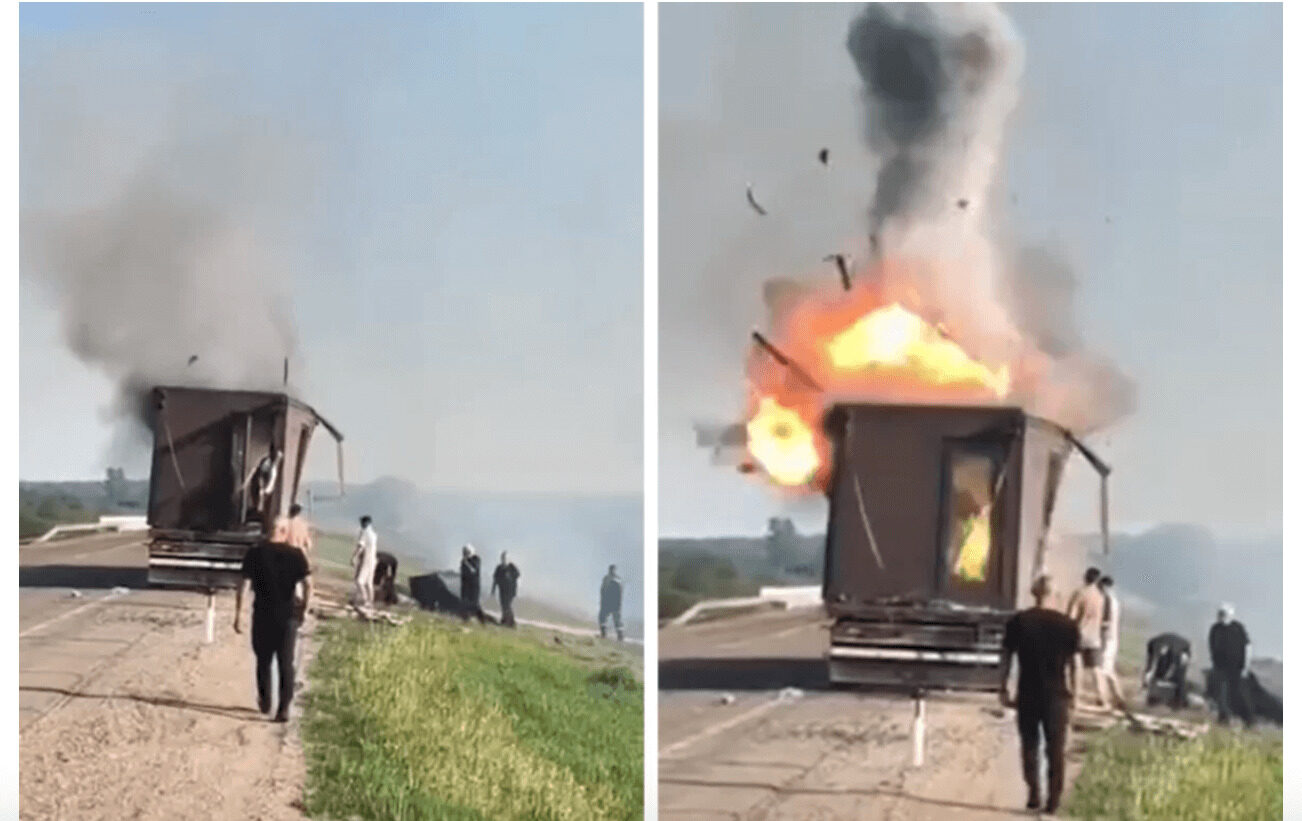
According to The Insider, another part of Operation Spiderweb was reportedly intended to target Ukrainka Air Base in Russia’s Amur region. The drones, however, never reached the airbase.
A truck believed to be carrying them caught fire on the Chita–Khabarovsk highway near Seryshevo. Amur region governor Vasily Orlov later confirmed that a truck carrying drones had caught fire on the highway and that the driver was injured.
Operation Spiderweb’s Reported Strike on a Russian A-50
One of the aircraft reportedly targeted during Operation Spiderweb was Russia’s A-50 airborne early warning and control aircraft.
Often described as a “flying radar,” the A-50 plays an important role in detecting aerial threats and coordinating Russian air operations. referred to as the “eyes” and “brain” in the sky for its ability to coordinate air missions and detect enemy aircraft from afar.

According to aviation expert Valeriy Romanenko, Russia currently operates only seven A-50s, which he calls “flying radars.”
These planes are based at Ivanovo Airfield, the same location where remnants of Russia’s massive An-124 “Ruslan” transport fleet were relocated. Every one of these aircraft is strategically important to Russian military operations.
While their role in direct frontline missions has somewhat decreased, A-50s still play a key part in supporting Russia’s air defense systems.
In earlier phases of the war, they routinely patrolled Ukrainian airspace from a distance, helping Russian fighter jets locate and engage Ukrainian aircraft, often leading to deadly outcomes.
Why Operation Spiderweb Was So Significant
A Unique Strategy the Enemy Didn’t See Coming
Footage circulated by Russian Telegram channels showed drones being launched from concealed mobile platforms inside Russian territory.
This was one of the defining features of Operation Spiderweb: instead of flying long distances across Russia’s air defenses, the drones were positioned much closer to their targets before launch.
The approach reduced the distance the FPV drones had to travel and allowed them to attack strategic aircraft directly at their airbases — an unconventional method that made Operation Spiderweb significantly different from Ukraine’s long-range drone strikes.
How Much Damage Did Operation Spiderweb Cause?
The Security Service of Ukraine initially estimated that Operation Spiderweb caused around $7 billion in damage to Russia’s strategic aviation.
The figure was an SBU estimate and should not be treated as an independently verified assessment of the operation’s total financial impact.
The SBU also said that the personnel involved in planning and carrying out the operation had been safely evacuated from Russian territory and returned to Ukraine.
How Operation Spiderweb Was Planned: Details from SBU Chief Vasyl Maliuk
In late June 2025, SBU Chief Vasyl Maliuk revealed new details about how Operation Spiderweb was planned and carried out, describing a complex mission involving logistics, specially designed drones, concealed launch systems, and carefully selected operators.

According to Maliuk, one of the biggest challenges was secretly transporting the equipment deep into Russian territory.
The drones resembled standard FPV models from the outside but were specially designed for the operation and equipped with multiple communication systems.
Each drone carried a custom-designed 1.6 kg warhead consisting of two 800-gram components. Maliuk said the shaped explosive charge was designed to penetrate an aircraft’s fuselage and detonate inside, increasing the damage to critical systems.
Maliuk said operators were instructed to target vulnerable and difficult-to-replace parts of the aircraft, including fuel tanks, avionics and areas associated with missile storage.
Secrecy was maintained through strict compartmentalization. According to Maliuk, some people involved in assembling the drones did not know they were contributing to Operation Spiderweb, while workers who built the wooden structures were unaware that they would eventually serve as concealed drone-launch platforms.
“I handpicked the best drone operators from CSO ‘A’,” he said. “They entered the combat control center at 5 a.m., handed over their phones, and got to work. Each one was assigned a specific aircraft target. They were given custom terrain models showing the exact layout, including the position of the wooden houses and the planned drone flight routes. I had my models as well.”
He also described how the drone houses were built to handle extreme conditions.
“We prepared for the possibility of winter operations,” he said. “That’s why each house had solar panels and EcoFlow battery systems to keep the drones constantly charged, even in temperatures as low as -50°C. The drone had to be fully powered and ready for launch.”
“Smuggling this equipment into Russia wasn’t easy. Because EcoFlow batteries and solar panels are restricted items, bribes had to be paid to Russian customs officials to get them through the border“.
Maliuk described the operation as the culmination of logistics, drone tech, human intelligence, remote control systems, and even artificial intelligence, all working in perfect sync:
Zelensky’s Reaction to Operation Spiderweb
President Volodymyr Zelensky described Operation Spiderweb as an “absolutely brilliant” and fully independent Ukrainian operation, calling it the country’s longest-range mission to date.
Zelensky later revealed that the operational headquarters had been located close to an office of Russia’s FSB — an indication of how deeply the mission had been concealed inside Russian territory.

International Reaction to Operation Spiderweb
Operation Spiderweb drew international attention not only because of the damage inflicted on Russian strategic aviation, but also because of what the attack demonstrated about the growing role of inexpensive drones in modern warfare.
U.S. special envoy Keith Kellogg warned that attacks on Russia’s strategic bomber fleet could increase the risk of escalation. NATO Secretary General Mark Rutte, meanwhile, noted the role of Russian strategic bombers in attacks against Ukraine but cautioned against drawing broad conclusions about how the operation might affect the course of the war.
U.S. Senator Richard Blumenthal compared the significance of the operation to major U.S. counterterrorism missions and argued that it challenged claims that Ukraine was losing the war.
NATO Secretary General Mark Rutte emphasized that Russia had been using its strategic bombers to target civilian areas in Ukraine, but he declined to speculate on how Operation Spiderweb might affect the future course of the war, suggesting such predictions aren’t always helpful.
Elon Musk also weighed in on the operation, writing: “Drones are the future of war. Manned aircraft are not.”
Russian Reactions to Operation Spiderweb
Russian Z-bloggers were unanimous: Ukraine has crossed yet another red line, and what happened is nothing less than a disaster for the Russian military leadership.
Russian pro-war blogger Roman Alyokhin compared the attack to Pearl Harbor, calling it “Russia’s Pearl Harbor” and urging a forceful response.

Journalist Timur Olevsky rejected the Pearl Harbor analogy, instead comparing the raid to Operation Frantic, the World War II shuttle-bombing missions in which U.S. aircraft operated from Soviet airfields.
Other Russian military commentators focused less on retaliation and more on the apparent failure to protect strategic aviation bases.
Pro-war blogger Boris Rozhin described the attack as a “complete failure” of the structures responsible for defending Russia’s strategic aviation, while military reporter Aleksei Zhivov questioned how conventional air-defense systems were expected to counter small tactical FPV drones.
Russia Today correspondent Andrei Filatov went further, blaming systemic corruption and failures in Russia’s counter-drone defenses.
My Thoughts as a Ukrainian
To me, Operation Spiderweb was brilliant, unexpected, and shocking at the same time. I have never doubted the creativity and resilience of Ukrainians, but the scale and complexity of this operation still left me in awe.
Ukraine has a long tradition of strong technical and engineering education, and today Ukrainian developers, engineers, cybersecurity specialists, and drone designers are applying those skills under extraordinary circumstances.
Operation Spiderweb showed how technology, careful planning, and innovation can reshape what is possible in modern warfare.
Whatever the final assessment of the damage, the operation demonstrated how dramatically drone technology has changed the economics of warfare.
Ukraine is fighting for its survival, and every innovation that allows a military objective to be achieved while reducing the risks faced by Ukrainian personnel matters.
Operation Spiderweb was not just an extraordinary military operation. It was also a remarkable example of Ukrainian ingenuity under the pressure of war — and one that I believe military analysts will be studying for years.
About the author:

Hi, I’m Victoria, a Ukrainian travel writer and former Kyiv tour guide. From 2016 to 2022, I worked with international visitors in Kyiv, sharing Ukrainian history, culture, and everyday life. Today, I write about Ukraine and my travels across Europe.