The Morning the War Began
On the fateful morning of February 24, 2022, a jarring sound pulled me from the depths of my dreams. I lay in bed for a few moments, trying to understand whether I was still dreaming or already awake. My upstairs neighbours were unusually loud for this time of day, moving around and talking.
Yesterday, the news reported that Putin would start the war in the coming days, the thought flashed through my mind. I reached for my phone by the bedside and opened the news.
The unthinkable had happened. The war had started.
The jarring sound that woke me up was a rocket strike that hit one of Kyiv’s buildings. At around 5 a.m., at least five explosions were heard on Kyiv’s Left Bank, where I lived.
At 6 a.m., President Zelenskyy convened the National Security and Defense Council. Martial law was declared throughout Ukraine, and Ukrainian airspace was closed. Missile strikes on Kyiv continued.
I glanced at my sleeping son, then rushed to the nearest shop to buy bottles of water. There were already long lines at the two shops near my home. I bought some food and a 5-liter bottle of water.
The Fear of What Could Come
My decision to leave Ukraine was driven mostly by maternal instinct. I wanted to protect my son from the horrors of war. I had read a great deal about the history of the Second World War and the crimes committed by the Nazis, both around the world and in Ukraine.
But war was also something my family had been familiar with since the 1980s. My father is a veteran of the war in Afghanistan, where he served in the Soviet forces from 1986 to 1989. He was wounded several times, suffered a concussion, and was hospitalized towards the very end of the war.
I know many stories from his time there. I still remember them. And I had always known that war was the most terrible thing that could happen in people’s lives.
Another fear that haunted me was the possibility of Kyiv — and Ukraine — being occupied by Russian forces. A sickening chill ran through me whenever I allowed myself to imagine it.
Even just closing my eyes and imagining the Russian tricolour flying over the main Kyiv street – Khreshchatyk, made me feel not only frightened, but deeply disgusted.
To live under occupation, to submit, to accept that from now on they would decide the fate of Ukraine and its people — to me, this was the worst possible outcome of the war that had just begun.
But if only it had been as simple as taking my son, packing a backpack, and leaving the country, where people were already waiting for us and offering their help.
On the same day of the war, afraid to remain in Kyiv, I left with my son for the Chernihiv region, where my father and sister lived. We went by train to Nizhyn, a small town in northern Ukraine.
And once we arrived there, we found ourselves essentially cut off from the outside world.
The day after our arrival, rail and road connections between Kyiv and the northern regions, including the Chernihiv region where we were staying, were closed. Russian troops were advancing into the Chernihiv region from several directions.
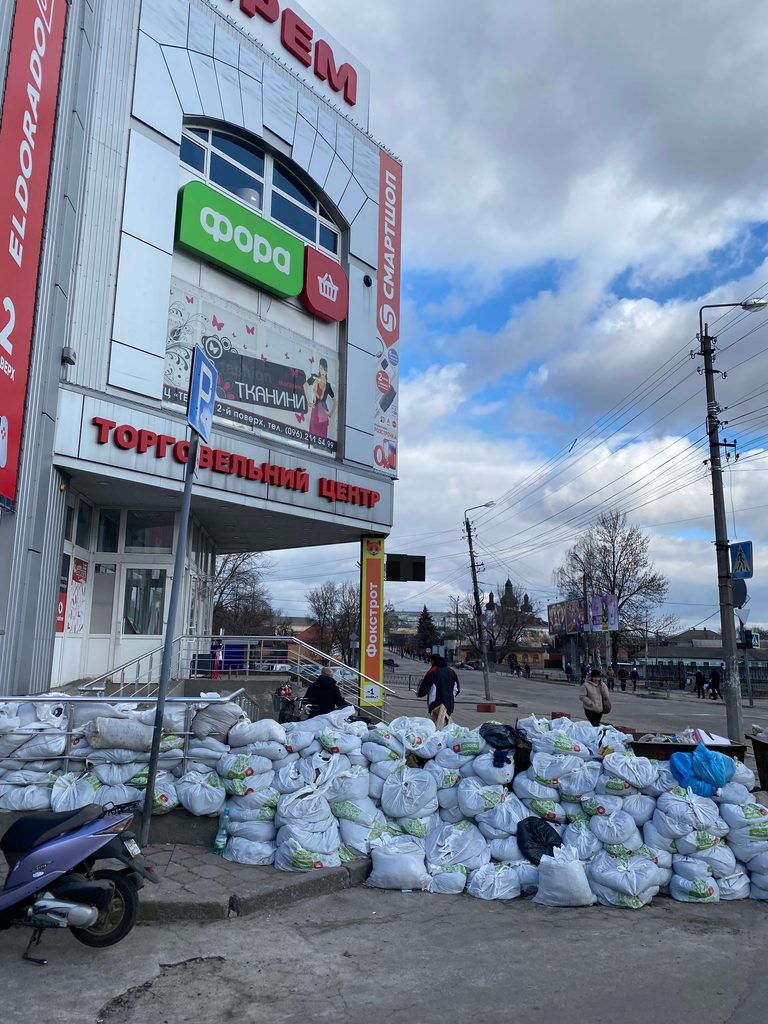
From my personal archive, March 2022
Some of the forces that had entered from the direction of the Sumy region appeared to be moving not so much to capture Nizhyn itself, but to continue west and southwest towards Kyiv.
No one was leaving. No one was coming in.
At the same time, fighting had already begun in the towns around Kyiv — Hostomel, Bucha, Vorzel, and Borodianka.
We remained in Nizhyn for ten days.
I Knew We Had to Leave
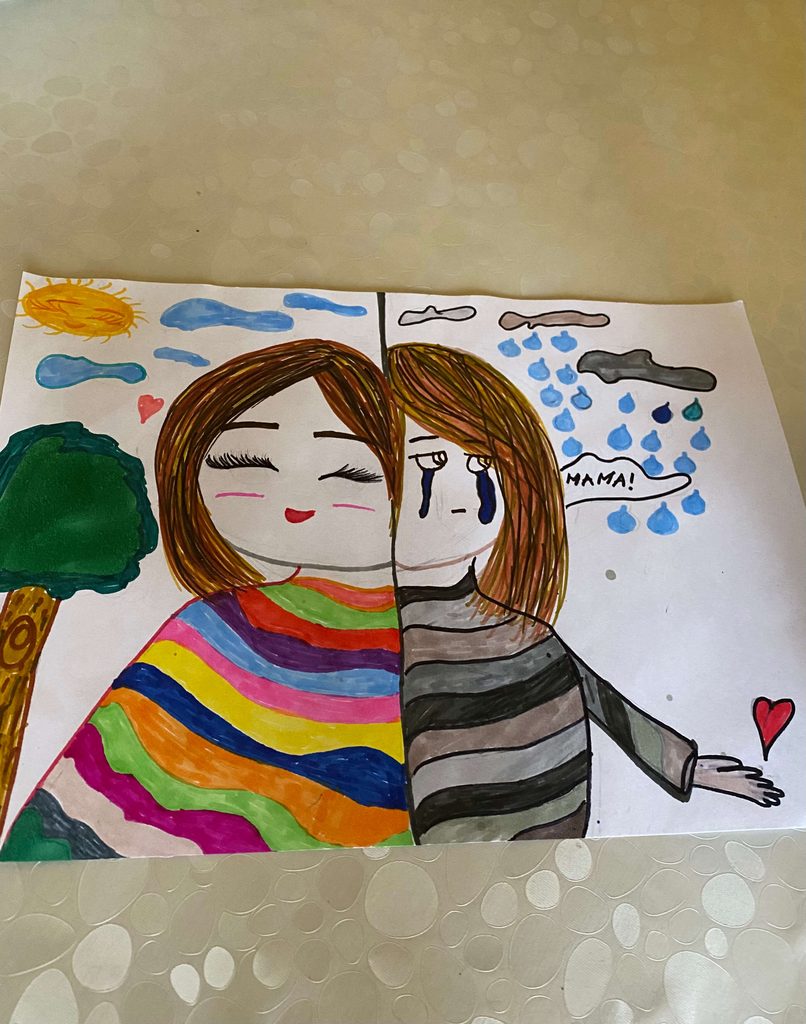
About a week after we arrived at my father’s house, I walked into the room where my son was staying and saw him lying on the sofa, staring at the ceiling. There was no hopelessness in his eyes, and no fear either. No. There was an expression of disappointment on his face.
At that moment, I felt an overwhelming pain for everything that had happened to us, and to him. More than anything, I wanted to change the situation somehow. I wanted to get him out of there and do everything I could to protect him.
A volunteer organization from Sweden was taking people by bus to the Ukrainian-Polish border, and through some contacts, I was offered a place for us.
But the buses were leaving from Kyiv, and first we somehow had to get there.
Why Sweden was the country we were travelling to, is another story. Probably an even more personal one. Perhaps one day I will write about that too.
So, I began calling everyone I could think of who might be able to help us get from Nizhyn to Kyiv. But no one agreed. By then, people were no longer travelling between the cities. It was too dangerous.
And yet, help came. Someone agreed to take us out of Nizhyn.
Finding a Way Back to Kyiv
As we drove through the forests and fields of the Chernihiv region, military vehicles kept appearing on the road, entering and leaving the forests. Mobile units of the Ukrainian Defense Forces were moving between positions, mining roads, and setting up ambushes.
I cried and prayed the whole way. I cried and prayed: to God and to my mother, my guardian angel.
I was terrified. Never, not even for a second, had I imagined that the tanks and military vehicles I had seen in the war museum in Kyiv would one day be on the roads in real life.
We had already covered most of the distance. I counted twenty checkpoints where soldiers stopped us and checked the car and our documents. And then there was just one final stretch of the journey ahead of us.
We were already near Brovary, only about thirty minutes from our home in Kyiv, when we were stopped at yet another checkpoint. What happened?
I could hardly believe my eyes and ears as I watched the soldier speaking to us and shaking his head. We couldn’t go any further.
Fighting had just begun near Brovary, in the area of Semipolky, a village north of Brovary directly along the Kyiv–Chernihiv highway. Russian forces had concentrated up to two battalion tactical groups in this area.
We asked how long we would have to wait, along with the other people whose cars had also been stopped. They told us they didn’t know. Maybe a day, maybe two. It was war.
Several cars pulled over and parked nearby. We did the same.
It was getting close to five in the afternoon. Soon it would be evening, then night, and after that, only uncertainty.
We made a decision. The main road was closed, but there were smaller roads through the fields and forests. We decided to take the risk rather than simply stand there and wait.
And that was how we finally reached Kyiv. Safe and unharmed.
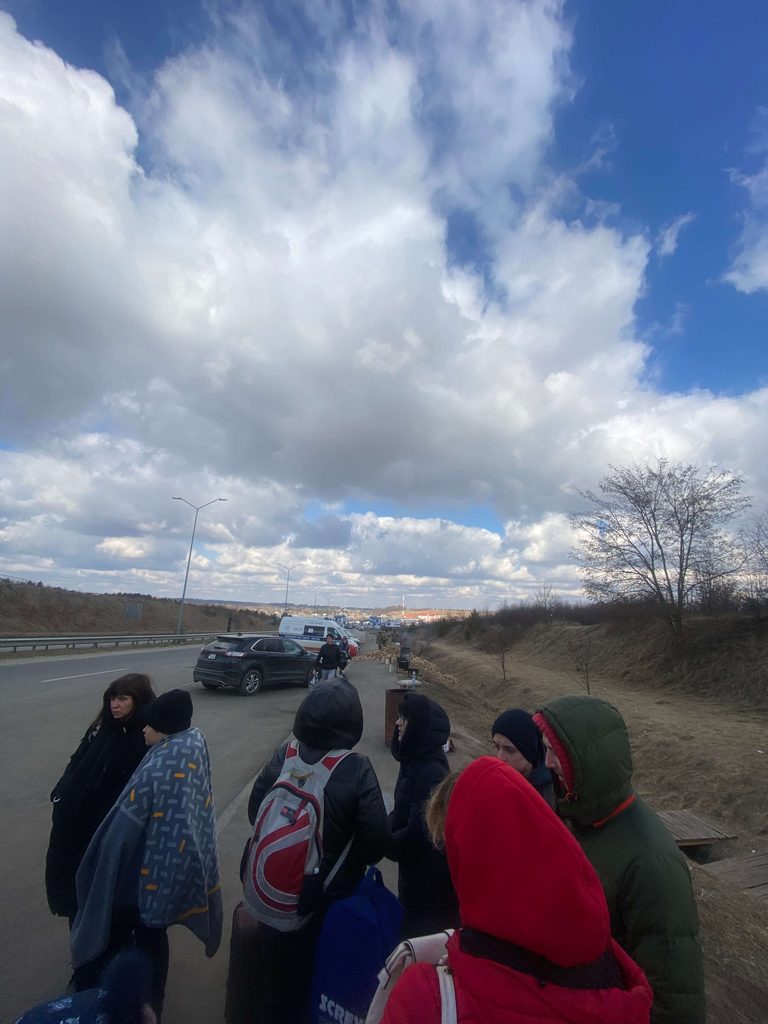
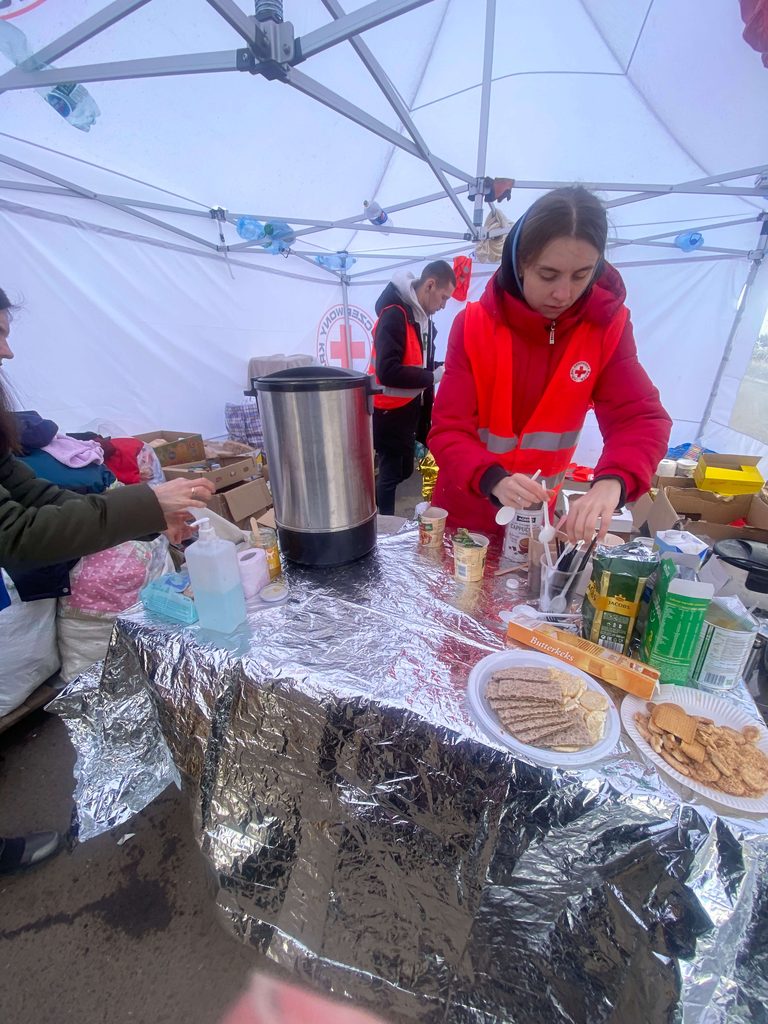
The next morning, at eight o’clock, we were already sitting on a bus that would take us towards the border between Ukraine and Poland.
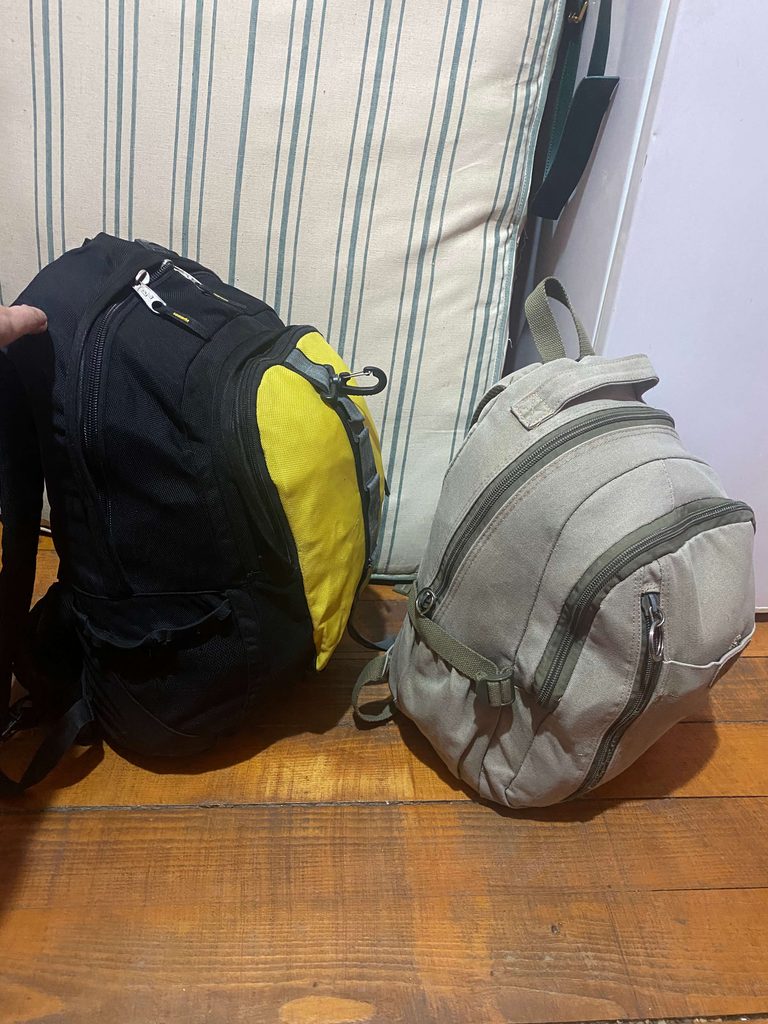
From my personal archive, March 2022.
A day later, I learned from the news what had happened near Brovary after we passed through the area.
On March 10, the Ukrainian 72nd Mechanized Brigade met a Russian battalion tactical group from the 6th Tank Regiment on the northern outskirts of Brovary. After almost four hours of fighting, the Russian force was defeated.
Seventeen tanks, three infantry fighting vehicles, and an armored personnel carrier were destroyed, and up to 55 Russian soldiers and officers were killed, including the commander of the tank regiment.
Living Between Two Worlds
Today, four and a half years later, we are still living in Sweden.
It is difficult to describe what it feels like to live physically in the safety of Sweden while your thoughts and your heart remain in Ukraine, worrying about your country and the people you care about.
It feels as though I am living in two different worlds at the same time. In front of my eyes is a quiet and ordinary life. But every minute of every day, I know that back home in Ukraine, everything is frightening. Very frightening.
There is a saying that we, as human beings, do not appreciate what we have until we lose it. And yet, I think I did appreciate everything I had before the war.
I loved my work as a tour guide in Kyiv. I felt as if I were flying above the ground in those days. I was happy spending time with my sisters and my newiews. I had a dear friend whom I met almost every week. We would visit cultural places around Kyiv, sit in cosy cafés, and travel together.
I was constantly learning something new, always hungry for new knowledge. I can confidently call that time one of the happiest and most successful periods of my life.
But I lived every moment of it sincerely, and I truly appreciated it while it was mine.
→ Read my story: How I became a Tour Guide
→ Read my story: Kyiv, My Forever Home: Amid the Shadows of War
About the author:

Hi, I’m Victoria, a Ukrainian travel writer and former Kyiv tour guide. From 2016 to 2022, I worked with international visitors in Kyiv, sharing Ukrainian history, culture, and everyday life. Today, I write about Ukraine and my travels across Europe.
1 thought on “The First Ten Days of the War: Leaving Ukraine”