
Interesting Facts about Ukraine
Table of Contents:
- Fact 1. Ukraine voluntarily renounced the third-largest nuclear arsenal in the world
- Fact 2. The Ukrainian language has been restricted and banned over the last four centuries.
- Fact 3. Ukraine is the birthplace of the Easter egg decorative tradition.
- Fact 4. Ukraine is home to the world’s longest musical instrument, the trembita.
- Fact 5. Vyshyvanka – Ukrainian national embroidered shirt.
- Fact 6. A cured slab of pork fat – Salo- is a unique and delicious Ukrainian delicacy.
- Fact 7. The world-renowned "Carol of the Bells" originates in Ukrainian culture.
Ukraine is a country in the heart of Europe, yet it remains largely unknown to many. It is the largest country in Europe, entirely within the continent, with a total area of 603,628 square km and a population of about 41.5 million people.
This article will reveal seven fascinating facts about Ukraine that will make you want to learn more about this country. These facts fastindexme.com will show you the uniqueness, beauty, and potential of Ukraine and its people.
Fact 1. Ukraine voluntarily renounced the third-largest nuclear arsenal in the world
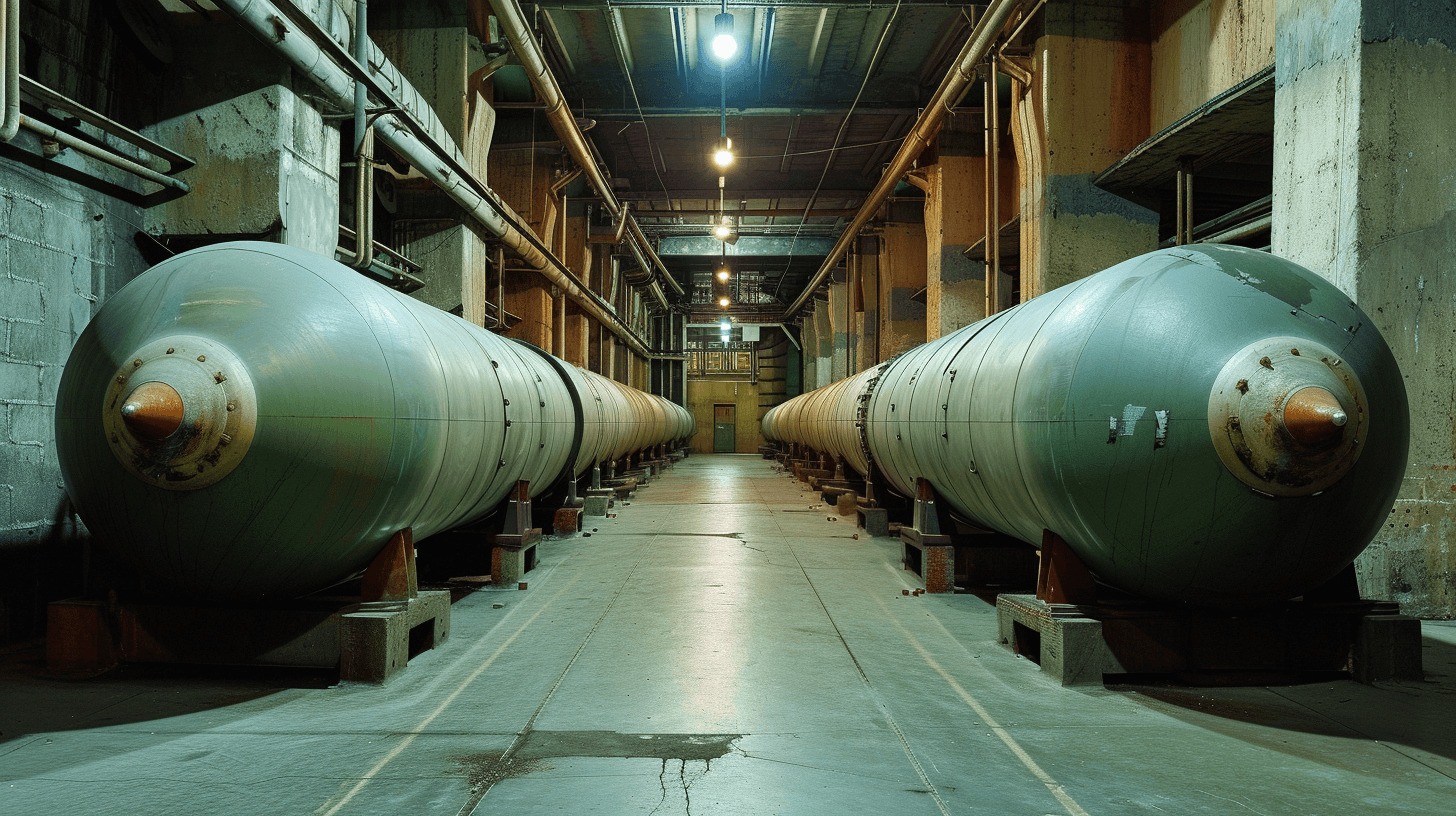
In 1994, Ukraine made a historic and unprecedented decision to give up its nuclear weapons, which it inherited from the Soviet Union. At the time, Ukraine had the third largest nuclear arsenal in the world, after Russia and the United States, with about 1,900 warheads and 176 launchers.
Ukraine agreed to dismantle and transfer its nuclear weapons to Russia in exchange for security assurances and economic compensation from the United States, Russia, and the United Kingdom. These three countries signed the Budapest Memorandum, which pledged to respect Ukraine’s sovereignty, territorial integrity, and political independence and to refrain from using or threatening to use force against Ukraine.
By renouncing its nuclear status, Ukraine demonstrated its commitment to non-proliferation and regional stability and earned international recognition and support.
However, the Budapest Memorandum was violated in 2014 when Russia annexed Crimea and two regions of eastern Ukraine, and later on, in February 2022, Russia started full-scale invasion of Ukraine.
Fact 2. The Ukrainian language has been restricted and banned over the last four centuries.

In 1876, Russian Tsar Alexander II signed a decree prohibiting the Ukrainian language in all spheres: theater, literature, science, church, and everyday life. The Ems Decree completely outlawed the Ukrainian language in the territory of Ukraine.
In 1863, the Minister of Internal Affairs of the Russian Empire, Pyotr Valuev, ordered the cessation of printing educational, religious, and scientific literature in Ukrainian.
In 1798, “Eneida” was published by the Ukrainian poet and writer Ivan Kotliarevsky. The first work of the new Ukrainian literature. What was the innovation of the writer? This work differs fundamentally from everything Ukrainian writers created up until then.
Ivan Kotliarevsky’s significant contribution lies in incorporating the folk language into literature. Therefore, the new Ukrainian literature begins precisely with this work.
Only after reading the poem of the outstanding Ukrainian poet do we immediately understand how rich this language is! There are even dictionaries of the Ukrainian language compiled based on the works of Ivan Kotliarevsky.
A whole linguistic system, a vast number of various syntactic constructions, artistic means of comedy, and synonymic series — all of this existed in our language so many years ago
Fact 3. Ukraine is the birthplace of the Easter egg decorative tradition.
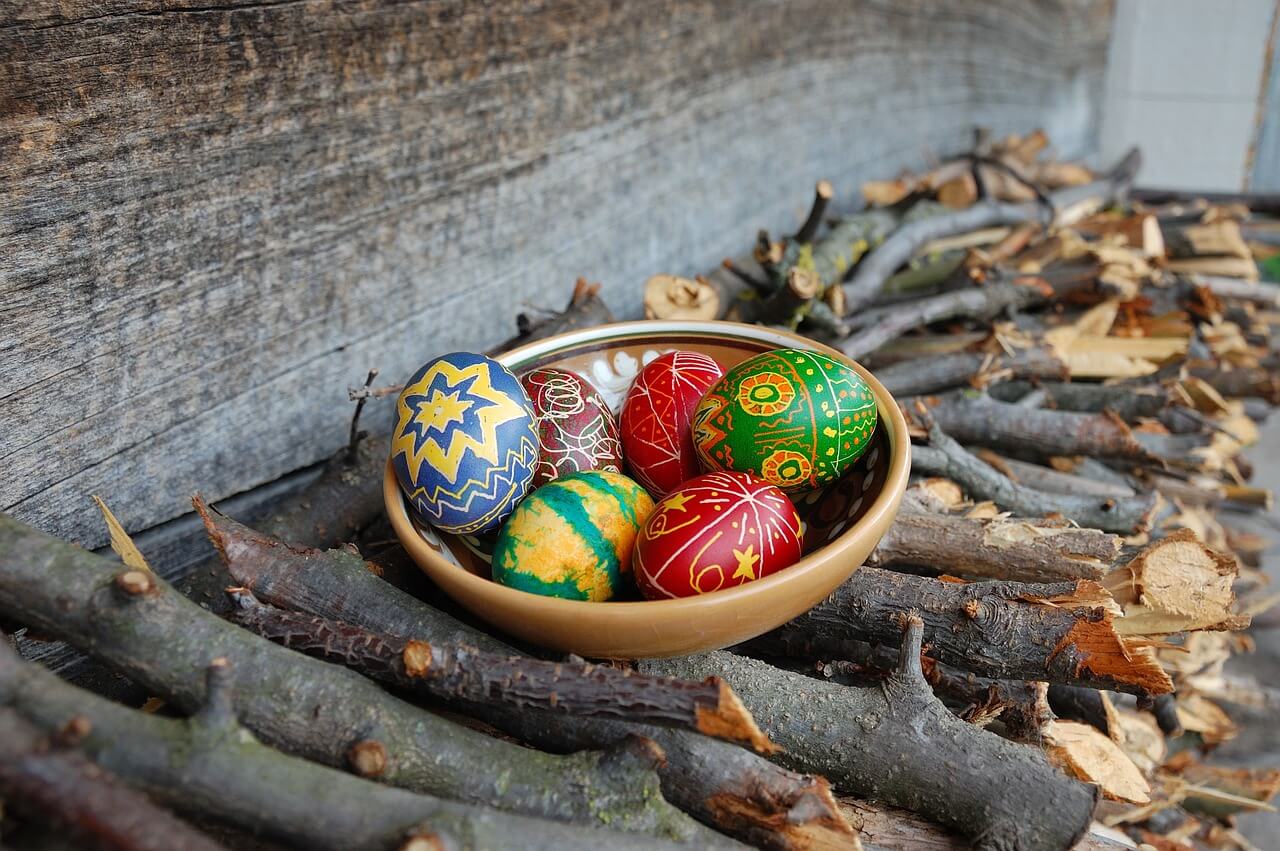
Easter eggs, or pysanky, are one of the most recognizable symbols of Ukraine. The tradition of decorating eggs with wax and dye dates back to ancient times when eggs were considered a symbol of life, fertility, and hope.
The word pysanka comes from the verb pysaty, which means “to write” in Ukrainian, as the eggs are decorated with intricate patterns and motifs with different meanings and messages. The eggs are often given as gifts or displayed in homes and churches during Easter.
The art of making pysanky is a skill passed down from generation to generation and is considered a part of Ukraine’s national and spiritual heritage.
Fact 4. Ukraine is home to the world’s longest musical instrument, the trembita.
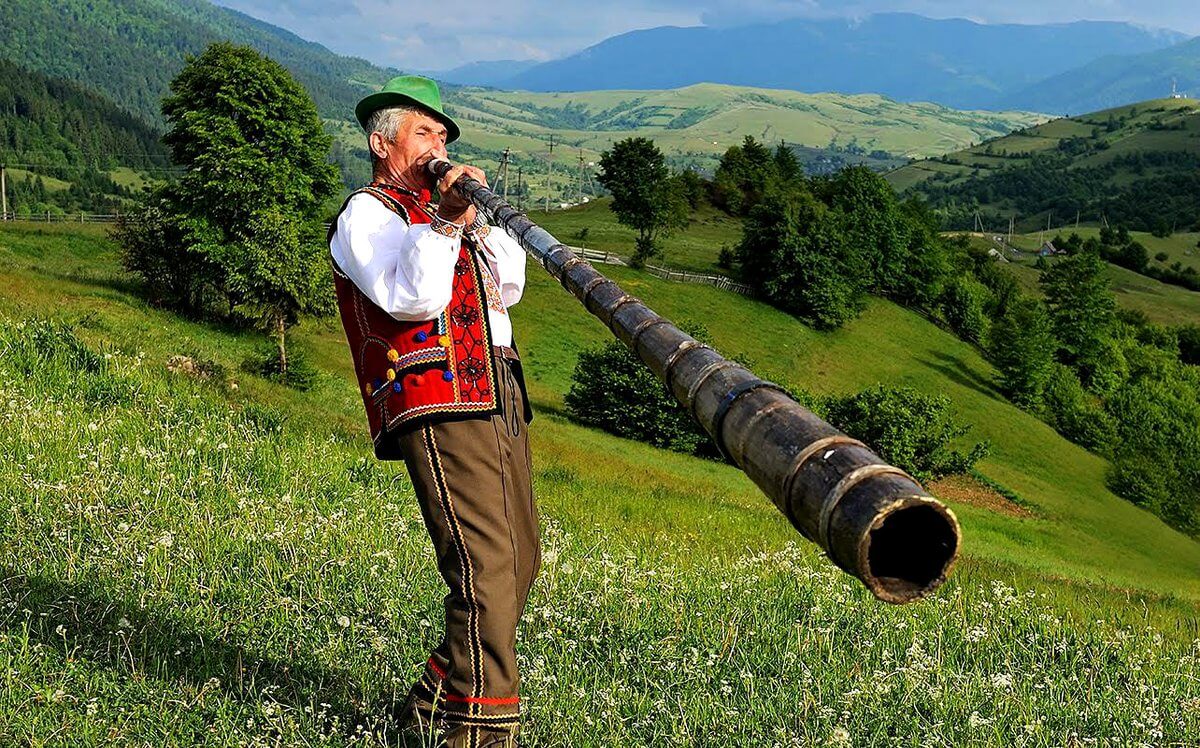
Imagine a horn that is longer than a car and louder than a jet engine. That is the trembita, a wooden instrument that can be heard for miles in the mountains of Ukraine and Poland.
The trembita has been used by the highlanders, known as Hutsuls and Gorals, for centuries. They made the horn from pine or spruce trees that were struck by lightning, believing that this gave the horn a special power.
They carved out the tree’s core and wrapped it with birch bark or willow rings. The result was a long tube that could produce a deep and resonant sound.
The highlanders used the trembita for various purposes, such as signalling, communicating, and celebrating. They played the horn to announce important events, such as births, deaths, weddings, and wars. They also used it to guide their sheep and dogs in the vast forests and meadows.
Fact 5. Vyshyvanka – Ukrainian national embroidered shirt.
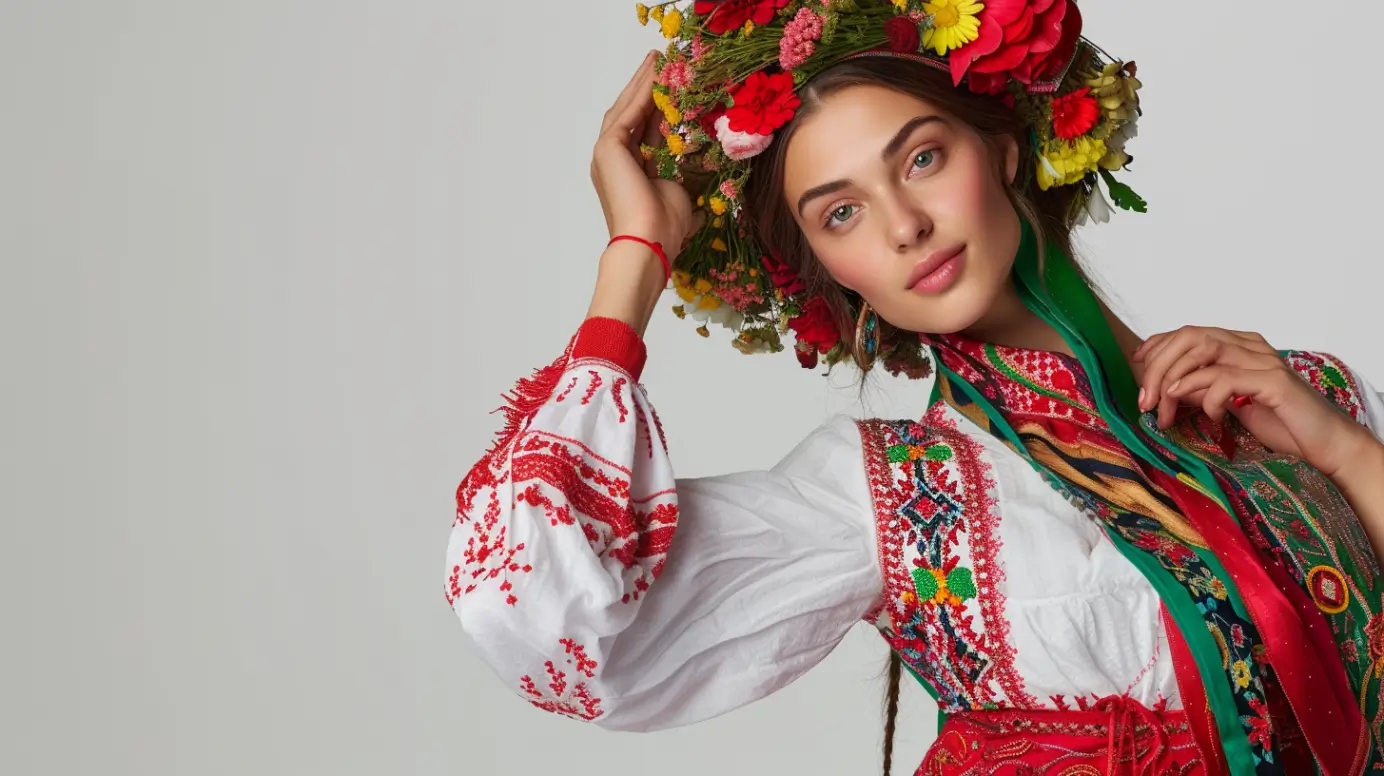
The vyshyvanka is a traditional Ukrainian costume consisting of a shirt or blouse embroidered with colourful patterns and motifs. The word vyshyvanka comes from the Ukrainian verb ‘vyshyvanka,’ which means “to embroider.” The embroidery is done by hand, using threads of different colours and materials, such as cotton, wool, or silk.
The patterns and motifs vary depending on the region, the season, the occasion, and the wearer’s personal preference. Some common themes are flowers, birds, geometric shapes, and symbols of the sun, the moon, and the stars.
Both women and men wear the vyshyvanka, which can be combined with other elements of the Ukrainian folk costume. It represents the identity, the history, and the spirit of the Ukrainian people.
Every year, on the third Thursday of May, Ukraine celebrates Vyshyvanka Day – a holiday dedicated to preserving the traditions of Ukrainian national attire. Participating in Vyshyvanka Day celebrations is easy – simply wear an embroidered shirt to work or school.
Vyshyvanka Day is a relatively new holiday that was initiated only in 2006. However, it has gained significant popularity within Ukraine and internationally in this short period.
Fact 6. A cured slab of pork fat – Salo- is a unique and delicious Ukrainian delicacy.

Ukrainian cuisine is a rich and complex phenomenon, influenced by many factors over the centuries.
Dating back to ancient times, salo has a long history and tradition in Ukraine, where it was used as a source of energy and warmth in harsh winters. It can be prepared in various ways, such as raw, smoked, fried, boiled, or baked, and seasoned with salt, pepper, garlic, herbs, or spices.
Depending on the occasion, it can be served as a snack, an appetizer, or a main course and is usually accompanied by bread, pickles, cheese, or honey. It is a tasty treat, and salo is also healthy, rich in protein, vitamins, minerals, and essential fatty acids, such as omega-3 and omega-6.
Salo is a part and parcel of Ukrainian celebrations and customs, such as weddings, funerals, Christmas, and Easter.
Fact 7. The world-renowned “Carol of the Bells” originates in Ukrainian culture.
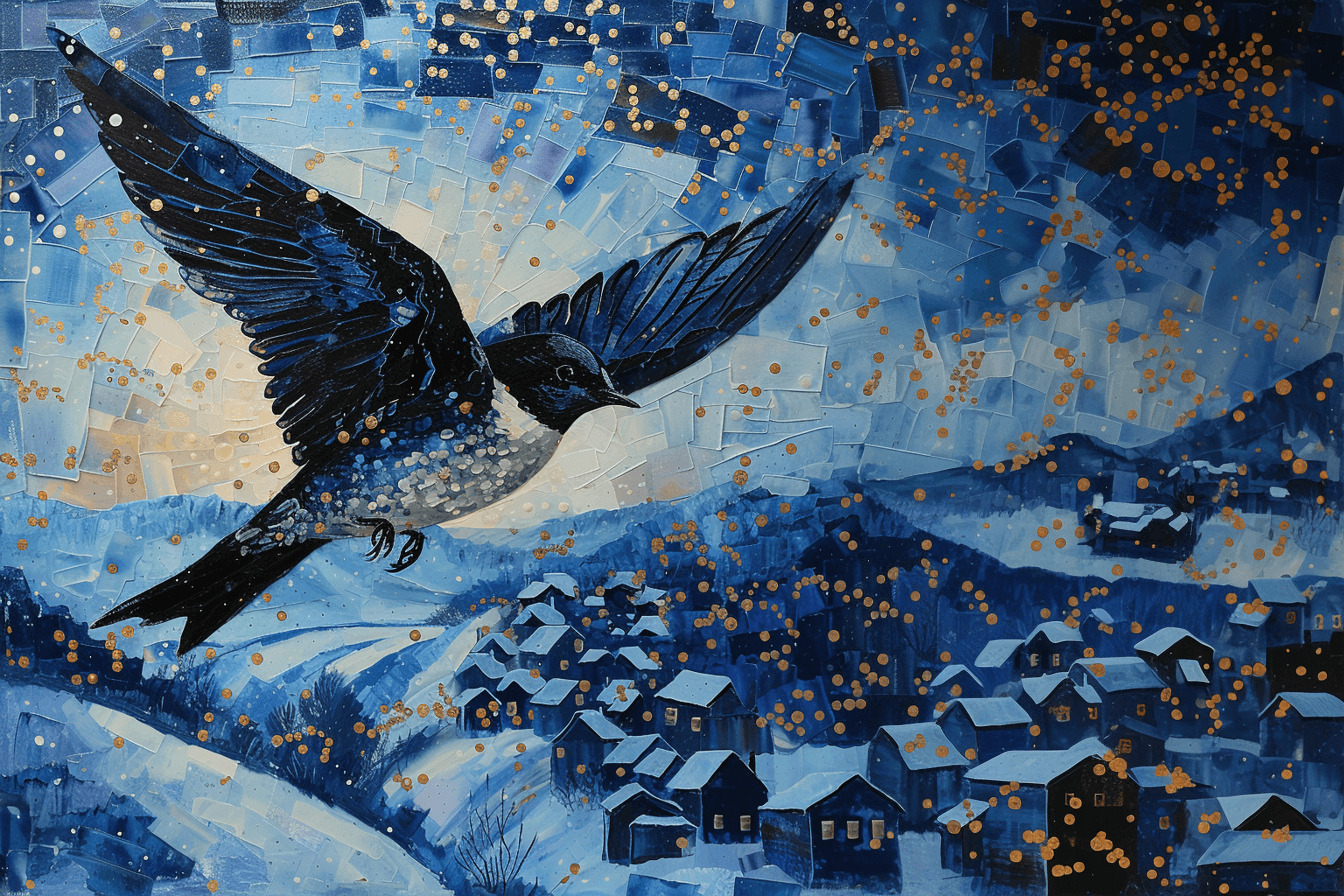
The beloved Christmas melody, “Carol of the Bells,” finds its roots in a Ukrainian folk tune that was initially unconnected to Christmas celebrations, having been prevalent in Ukraine’s pre-Christian era.
Originally titled “Shchedryk,” the song was inspired by traditional Ukrainian folk melodies and themes, particularly those associated with the New Year in April in pre-Christian times.
The traditional song, “The Little Swallow,” welcomed the Spring New Year with vivid imagery of a swallow flying into a home and beckoning the homeowner to observe the signs of a prosperous year ahead.
It urged him to inspect his livestock and anticipate the bounty that the forthcoming spring promised.
Transcending its folk origins, “Shchedryk” underwent a remarkable transformation when it was adapted into the Christmas carol known as “Carol of the Bells.”
This adaptation, which took place in the early 20th century, was facilitated by Peter J. Wilhousky, an American composer of Ukrainian descent, who was moved by the melody’s bell-like harmonies.
Wilhousky crafted new English lyrics, reimagining the song within the context of Christmas and giving it a new layer of universal appeal.
About the author:

Hello and welcome! My name is Victoria, and I’m a private tour guide in Kyiv. Since 2016, I have been offering private tours on various topics for visitors to the capital of Ukraine. I speak fluent English and love sharing stories. When not guiding, I write about Ukraine on my blog and my travel experiences and insights in Sweden and the Baltics.