
Table of Contents:
- The Origins of Carol of the Bells: Ukrainian Song Shchedryk
- Mykola Leontovych – creator of "Shchedryk"
- Triumph of “Shchedryk“ in New York
- Birth of “Carol of the Bells“
- Real Mission of the Ukrainian National Chorus Abroad
- Fame Abroad and Russian Terror Back Home
- The assassination of Mykola Leontovych
- 100 years of "Schedryk": War for the Independence of Ukraine Continues
The Origins of Carol of the Bells: Ukrainian Song Shchedryk
During the past Christmas season, chances are you heard one of the world’s most beloved holiday carols, “Carol of the Bells.” But here’s the surprise — this iconic melody, which today feels as timeless as Christmas itself, was actually written in 1916 by Ukrainian composer Mykola Leontovych and originally titled “Shchedryk.”
Even more fascinating, it wasn’t a Christmas song at all. Its roots reach back to ancient times, long before Christmas traditions arrived in Ukraine, when people celebrated the New Year and the coming of spring in March. The folk song tells the story of a swallow flying into a home to announce a bountiful year ahead for the family.
The title Shchedryk comes from the Ukrainian word “shchedryj,” meaning “bountiful.” The ritual behind the song was intended to bless the homeowner and bring good fortune to the household for the year ahead.
“Shchedryk” was traditionally sung on Generous Evening, when the whole family gathered around the table to welcome the New Year. Carolers, often children or young people, would wander from house to house, singing beneath windows. In return, they were rewarded with treats, food, or coins.
As P. Kozytsky, a contemporary of Leontovych, once said: “Shchedryk is not merely an arrangement of a song; it is a work of music in its own right, illuminated by a ray of genius and deserving of a prominent place in the global treasury of music.”
Click the audio below to hear a recording of “Shchedryk”, performed by the “Ukrainian National Choir” (Ukrainian Republic Capella) in New York in 1922.
The song’s journey onto the world’s stage and its transformation into an American Christmas classic is a tale of musical inspiration, nationalism, and political violence.
Mykola Leontovych – creator of “Shchedryk”
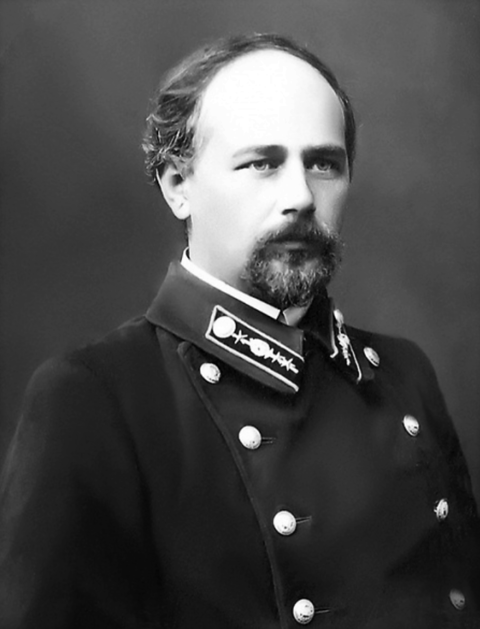
Mykola Dmytrovych Leontovych (13 December 1877 – 23 January 1921) was a Ukrainian composer, conductor, ethnomusicologist, and teacher. His father, grandfather, and great-grandfather were village priests.
Mykola was highly critical of himself. The author worked on his masterpiece “Shchedryk” for years. Only after six years, in August 1916, he sent the manuscript of “Shchedryk” (a song for mixed choir a cappella, meaning singing without instrumental accompaniment) to the renowned Kyiv conductor Oleksandr Koshyts. A few months later, the song was first performed in Kyiv.
Triumph of “Shchedryk“ in New York
On October 5, 1921, “Shchedryk” was performed in Carnegie Hall in New York City to a sold-out audience. It was a world tour of the Ukrainian National Chorus conducted by Oleksandr Koshytz. What the New York media posted about it after the performance:
- The New York Tribune, “a marvel of technical skill.”
- The New York Times “simply spontaneous in origin and artistically harmonised.”
- The New York Herald, “a profound unanimity of feeling that aroused genuine emotion among the listeners.”
The Ukrainian National Chorus, conducted by Oleksandr Koshytz, visited 36 states and 115 cities in the US. “Shchedryk” was the standout “hit” from the chorus’s repertoire, as conductor Oleksandr recorded in his memoirs.

After their premiere in New York, the Ukrainians continued their tour in Chicago, Washington, Philadelphia, St. Louis, and about fifty other major cities across the USA.
The choir performed in the most prestigious concert halls and luxurious auditoriums of renowned American universities, including Yale, Princeton, and others.
The performance of ‘Shchedryk’ begins with a solo soprano, followed by the entire group joining in to develop the motif.
The piece’s musical movement is characterised by its journey from tender, transparent opening bars through a gradual build-up of sound and emotional intensity, reaching a climax in measures 20 to 24 and then a general diminution.
In this way, the entire ‘Shchedryk’ forms a cohesive emotional wave that is architecturally elegant in its structure.
Birth of “Carol of the Bells“
Fifteen years after “Shchedryk” soared to overseas success, an American of Ukrainian descent and NBC radio station employee, Peter Wilhousky, penned the English version of the melody, essentially giving it an American twist in the form of a Christmas hymn called “Carol of the Bells.
Peter Wilhousky grew up in a family of Carpatho-Rusyns who immigrated to America and thus had a keen ear for Ukrainian melodies.
He crafted his rendition of Leontovich’s score and tailored new lyrics, which had nothing in common with the original text. He legally secured the copyright for his work, and… Leontovich’s “swallow” flew into the world.
With its English lyrics, “Carol of the Bells,” the piece captured the imagination around this popular Christian holiday in the U.S., complete with its essential symbols—sleigh bells jingling and Santa rushing to delight children on a magical Christmas night.
“Shchedryk” resonates across the ocean and is often played in other cultures without a nod to its Ukrainian origin. This melody has found its way into popular American TV shows like “The Simpsons,” “South Park,” “Family Guy,” “The Mentalist,” and “The West Wing.”
It’s also a favourite in globally renowned movies such as “Die Hard 2,” “Home Alone,” “The Mirror Has Two Faces,” and the “Harry Potter” series. “Shchedryk” becomes an essential tune every Christmas, featuring in the line-up of most TV and radio channels. Not to mention its presence in family and corporate gatherings during the holiday season.
Real Mission of the Ukrainian National Chorus Abroad
In October 1917, the Bolsheviks seized power in Moscow and initiated hybrid wars against states formed on the territories of the former Russian Empire. They primarily focused on occupying Ukraine, framing it as “liberation” from “chauvinists.”
To counter the Russian onslaught, Ukraine sought help from the West. How could Ukrainians break free from these “brotherly embraces”? How could they convince the West that they were a distinct nation from the Russians? Here, music became a tool in Ukrainian diplomacy.
The then leader of the Ukrainian state and commander-in-chief of the Ukrainian People’s Republic, Symon Petliura (1879–1926), decided to introduce Ukraine to the world through culture and sent the Ukrainian National Choir to the West.

Symon Vasylyovych Petliura, 22 May 1879 – 25 May 1926, was a Ukrainian politician and journalist. He was the Supreme Commander of the Ukrainian People’s Army and led the Ukrainian People’s Republic during the Ukrainian War of Independence, a part of the broader Russian Civil War. Petliura was born to a family of Cossack heritage in Poltava.
He believed that music, speaking directly from the Ukrainian soul in the universal language of diplomacy, could change Western leaders’ attitudes toward Ukraine.
“Shchedryk”, performed by a choir under Oleksandr Koshyts on January 1, 1919, deeply impressed the Ukrainian leader, prompting him to immediately assign the conductor to tour Europe.
Fame Abroad and Russian Terror Back Home
However, no miracle occurred for Ukraine. With the agreement of the leaders of the Entente, Ukrainian lands were divided among neighbours: central Ukraine was given to “united and indivisible Russia” (the White Guards), Galicia to Poland, Bukovina to Romania, and Transcarpathia to Czechoslovakia.
The Western world did not recognize Ukraine’s independence, ignoring the right to self-determination of the forty-million-strong Ukrainian nation. After capturing the Ukrainian capital in February 1919, the Russian Bolshevik army unleashed terror there. Conscious Ukrainians were executed and buried in mass graves.
Ukrainian diplomatic missions ceased their operations. Two years later, on May 25, 1926, Symon Petliura was assassinated with seven shots to the chest on a Paris street. For over half a century, Ukraine found itself under Kremlin rule.
For a long time, the Russian government not only hid Ukrainian music from the world but also banned Ukrainians from performing it. As early as 1863, the Russian Minister of Internal Affairs, Pyotr Valuev, issued a circular (the Valuev Circular) prohibiting the printing of Ukrainian-language books and even texts of Ukrainian folk songs.
Another document, the Ems Order, was issued by Tsar Alexander II in 1876, banning Ukrainian-language plays and concerts with Ukrainian musical repertoire.
The assassination of Mykola Leontovych
When Carnegie Hall was enchanted by the melodies of “Shchedryk” from the faraway lands of Ukraine and received them with rapturous applause, its author, Mykola Leontovich, had already been gone from this world for a year and a half.
Mykola Leontovych was murdered by a ‘chekist’ (Soviet State Security) in his parents’ home. Why? Simply because he stood for a free and independent Ukraine, a struggle that continues to this very day.

In Soviet times, the story of the assassination and the name of the murderer were thoroughly covered up; only in the 1990s, when the Soviet Union archives were opened up, the text of the report revealed the name of the murderer and what then happened.
Mykola Leontovych was at his parents’ home in the village of Markivka (near Vinnytsia) to celebrate the Christmas holidays.
On the night before his death, the man who would become Mykola Leontovych’s assassin appeared at his parents’ doorstep, asking for shelter. His name was Afanasiy Hryshchenko. Claiming to be on a government assignment, he even presented official papers.
The house was small, so Leontovych and the chekist ended up sharing the same room. But the next morning, on January 23, 1921, Hryshchenko pulled out a gun, shot the composer, and began looting the home.
Inside were Leontovych’s sister, Viktoriya, and his young daughter, Halyna. Just as he had done with the composer’s father, the intruder bound their hands before ransacking the house. He even threw on Leontovych’s father’s half-coat, cursed profanities, and after robbing the family, disappeared into the cold January day.
Just as today, the official Kremlin playbook was used. It was presented as a trivial robbery by a criminal. However, researchers discovered documents in the State Archive of Vinnytsia Region indicating that, in early December 1920, Afanasiy Hryshchenko was employed by the Haysyn Soviet State Security as a district informant.
Mykola Leontovych was a member of the Synod of the Ukrainian Autocephalous Church, and its members were on the list of the Soviet State Security for physical destruction.
His older daughter, Halyna, later recalled her father saying, shortly before his death, that he had documents to leave the country for Romania and that he had these documents with him among his sheet music during a concert. But, after returning from tea following the concert, Leontovych noticed someone had gone through his papers.
Mykola Leontovich passed away in the prime of his life. Just before his tragic death, he had begun working on major musical compositions, the first of which was the folk-fantasy opera “On Mermaid’s Easter.”
A bullet from a malevolent chekist cut short his life and his highly talented artistic work. However, the musical legacy he left behind has forever inscribed his name in both Ukrainian and world musical culture.
In 1901, while working as a teacher at a theological school in a village in the Vinnytsia region, Mykola Leontovych met his future wife Klavdiya. She had come to visit relatives and was the daughter of a priest. A year after meeting, the couple married and had two daughters – Halyna and Evgenia.
Klavdiya showed extraordinary care for her family, taking on all household duties. Like the wives of many famous artists, she became a pillar of support for Leontovych, providing him with the comfort and conditions necessary for productive work.

100 years of “Schedryk”: War for the Independence of Ukraine Continues
Whenever you next hear the “Carol of the Bells,” please take a nanosecond to remember this composer who had so much more to contribute to the world of music, as well as all the people of Ukraine who continue to be killed by gunshots in defense of their democratic, independent country.
About the author:

Hello and welcome! My name is Victoria, and I’m a private tour guide in Kyiv. Since 2016, I have been offering private tours on various topics for visitors to the capital of Ukraine. I speak fluent English and love sharing stories. When not guiding, I write about Ukraine on my blog and my travel experiences and insights in Sweden and the Baltics.